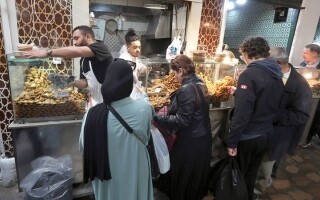
The sale of 'Makroud' becomes an intensive seasonal activity that reflects the convergence of the economic, social, and religious dimensions of the holy month. The importance of this dessert is not limited to its gastronomic aspect; it is also an integral part of a cultural identity that reconnects generations with their heritage. While vendors are busy cutting and packaging the hot pieces, daily scenes of interaction and exchange unfold in the background, where the old city reappears as a vibrant and pulsating space. Residents visit the old city to purchase supplies for the table, from dates and pastries to sweets that adorn the shop fronts. In the old alleys of the Tunisian capital, where ancient stones blend with the sounds of vendors and the aromas of hot sweets, 'Makroud' continues its presence as one of the staples of the Iftar table in Tunisia. 'Makroud' is considered one of the most ancient Tunisian desserts, most closely linked to popular memory. It is prepared from semolina dough stuffed with dates, then fried until it turns golden, before being dipped in honey or sprinkled with sugar. Its preparation methods vary from one region to another, yet its presence on Iftar tables brings families together as a culinary ritual symbolizing generosity and inherited traditions. With the arrival of Ramadan, the pace of life in Tunisia changes. After hours of fasting, the local markets buzz with activity just before the time of Iftar.